Out Of Office / Kialy Tihngang Solo Exhibition / Soup Gallery / 2025

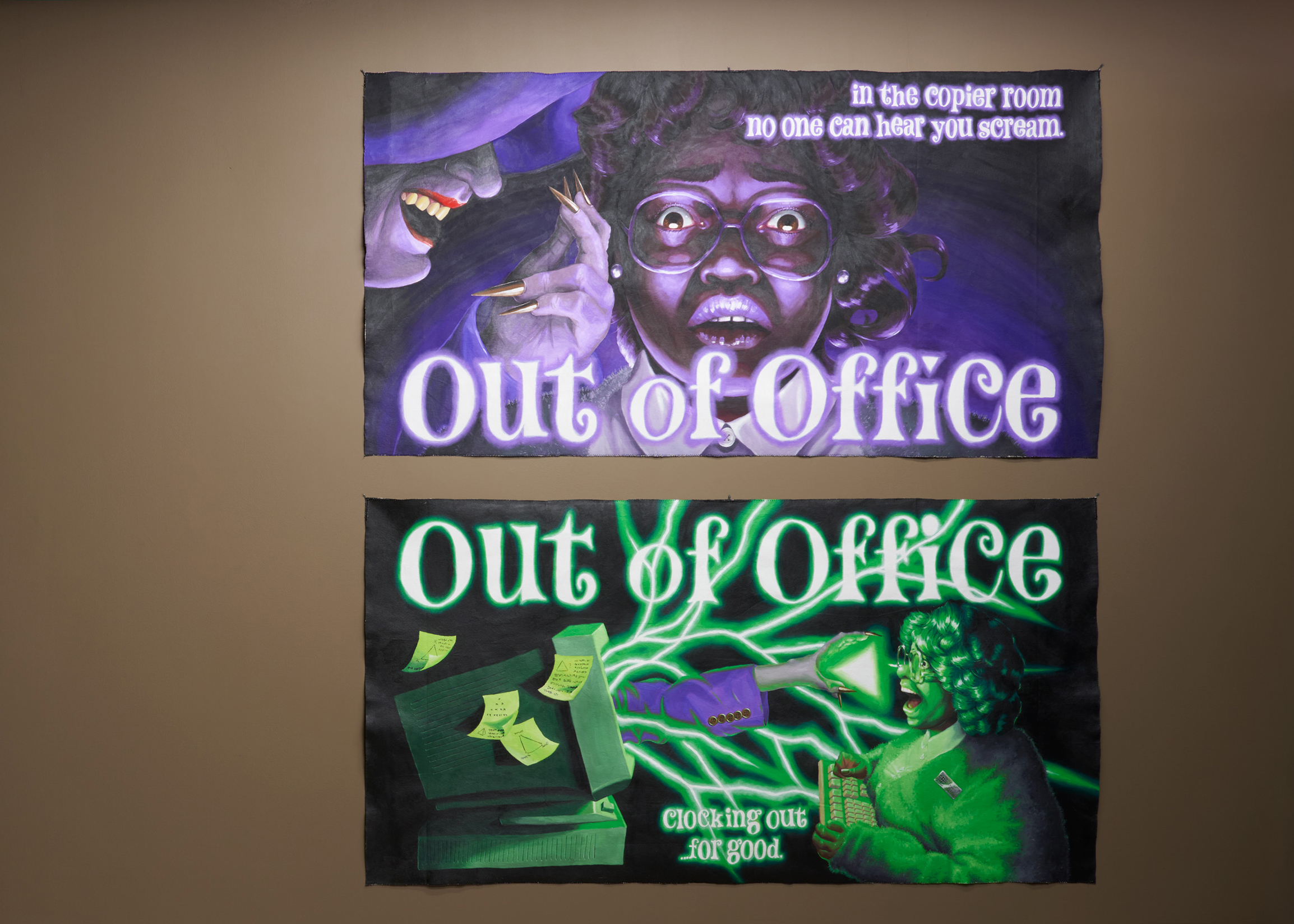



I was invited by Soup Gallery to curate a solo presentation by Kialy Tihngang. Tihngang’s solo exhibition centers on her latest moving-image work ‘Out Of Office’, which premiered in February at the Glasgow Short Film Festival. A deliciously bleak corporate satire, the film follows the perceptive yet perpetually silenced Office Girl as she navigates working first at VILCORP, a villainous corporation steeped in outdated 80s racism and sexism, and then People Food HQ, a supposedly utopian workplace of the future led by biotechnologist, business woman, philanthropist and mother, Parsley Peppercorn. Reflecting upon early 00s on-screen popular culture that glamourised the idea of labour, such as The Devil Wears Prada, The Apprentice, Josie and the Pussycats or Dragon’s Den, Tihngang offers a more contemporary critique on how capitalist companies avoid extermination through an endless cycle of rebrands and reinventions. Executed in playful B-movie horror aesthetics and packed with on-point comic observations of workplace culture, Out Of Office raises pertinent questions about how the culture of silent corporate compliance combined with the cult of the individual keeps employees in a permanent state of distraction and exploitation. In particular, the film exposes the systemic oppression faced by women of colour within the workforce, a structure designed by a prejudiced patriarchy and sadly still upheld despite any performative corporate feminism.
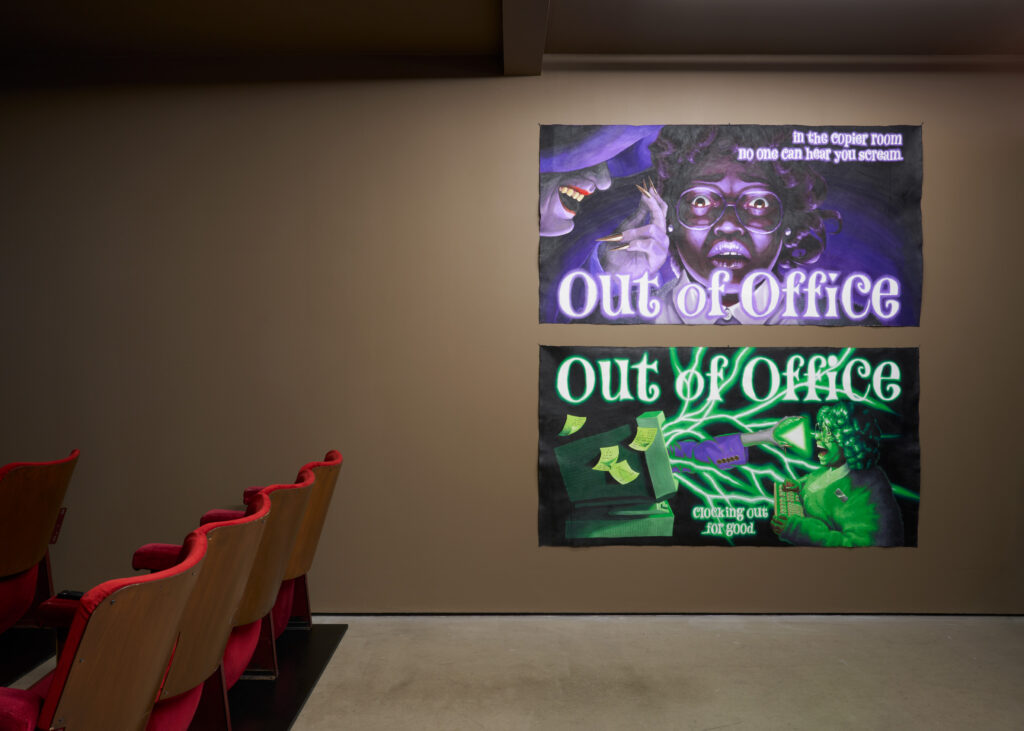
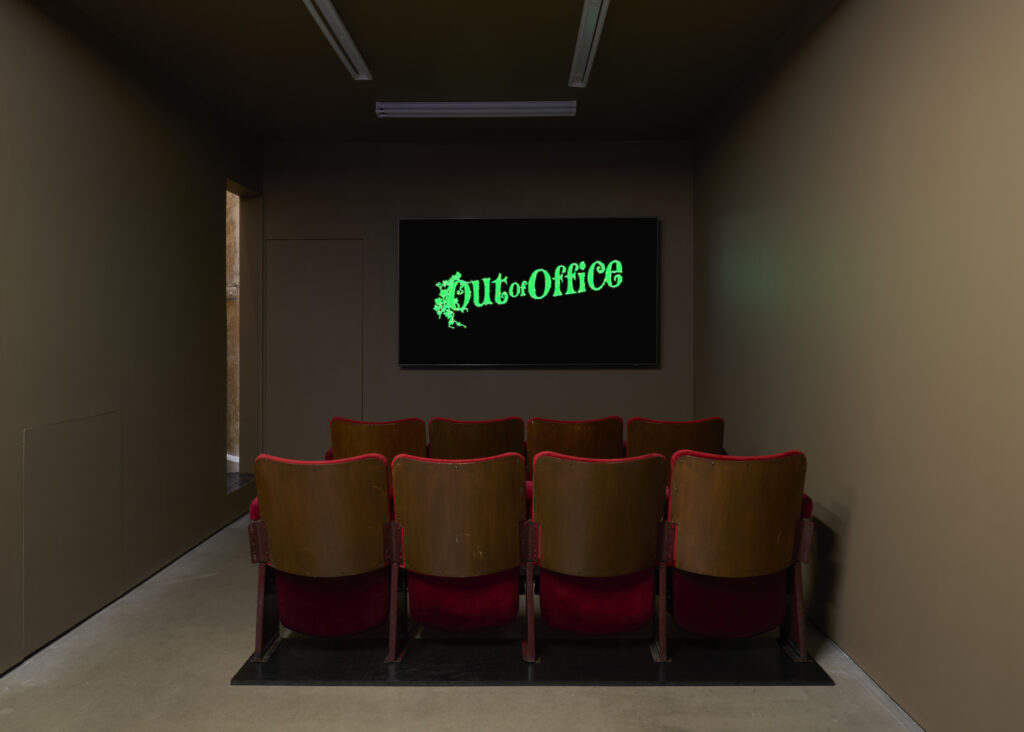
At Soup, ‘Out Of Office’ is situated within an environment evocative of Tihngang’s nostalgia for her formative filmic experiences at Reading’s Showcase Cinema, complete with rich, chocolate brown walls and two aisles of vintage cinema seats, themselves reclaimed from a recently refurbished regional movie theatre. Alongside, the artist presents a pair of handpainted promotional posters for the film, drawing on recognisable compositional and copywriting tropes. Taglines such as ‘in the copier room, no one can hear you scream’ once again use humour to underline the inherent injustice of late-stage capitalism, revealing that exploitation never goes out of style – it just gets better branding.